





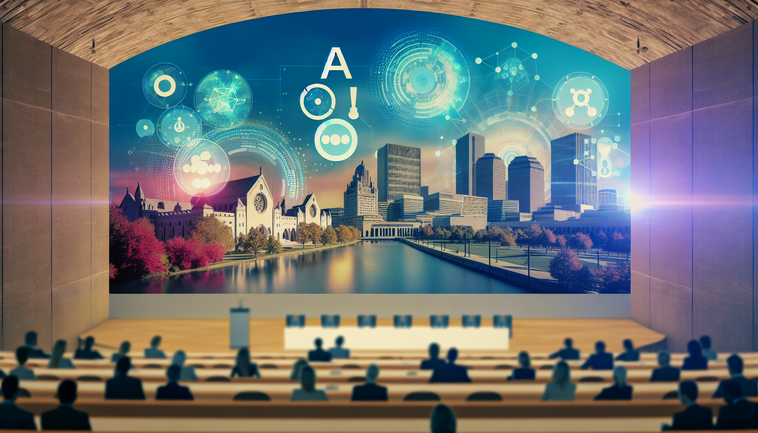
Harvard’s Vision: AI and Its Role in Shaping Tomorrow’s Cities
Earlier this month, I found myself amidst a congregation of thought leaders and innovators at the prestigious Public Sector Executive Summit: “AI and The Future City.” Hosted in the iconic Maxwell Dworkin Building at Harvard University—an establishment backed by technological visionaries Bill Gates and Steven Ballmer—the event drew attention to the transformative power of artificial intelligence in municipal governance.
The summit’s central theme revolved around envisioning the cities of tomorrow, heavily infused with AI-driven solutions. The representatives from various sectors underscored how AI could not only streamline city operations but also enhance the quality of life for citizens through improvements in infrastructure, transportation, and public safety.
One of the insights I found particularly compelling was the discussion on traffic management in urban areas. With urban congestion still a prevalent issue, AI-based predictive analytics could revolutionize how we tackle this persistent challenge. Cities employing real-time data and machine learning algorithms could potentially foresee traffic build-ups and suggest alterations to traffic flows, significantly reducing commute times and environmental impact.
Moreover, the integration of AI in emergency response systems was another hot topic. Speakers presented case studies where AI-enabled networks could significantly cut down response times during crises. By analyzing a variety of data inputs—such as social media posts and emergency calls—AI systems can offer emergency services timely insights, ensuring resources are deployed efficiently and lives are safeguarded.
The event also delved into the ethical considerations and potential risks associated with AI in public governance. As cities become increasingly smart, the discussion highlighted the crucial balance between leveraging data for public good and safeguarding citizen privacy. Attendees stressed the importance of robust regulatory frameworks to ensure AI implementation respects privacy and equity principles.
This summit reminded us that while the technological possibilities seem boundless, human oversight and ethical standards must anchor such advancements. The enthusiasm for AI offers a glimpse into a future where municipal governments could operate with unprecedented efficiency and foresight, provided they navigate the landscape with caution and prudence.
In conclusion, the fusion of AI and city management promises to craft environments that are not just smart but also intrinsically human-centric. As we stand on the brink of this transformative era, it’s imperative that all stakeholders—governments, innovators, and citizens—engage in an ongoing dialogue to co-create cities that harmonize technological brilliance with societal welfare.