



Revolutionizing 3D Printing: Crafting Metal Parts with a Friction Wheel
The world of 3D printing constantly evolves, often pushing the boundaries of technology and creativity. The latest innovation presented to the tech community is the capability of printing metal components using an Ender 3 printer equipped with merely a friction wheel. This breakthrough has garnered attention, especially among DIY enthusiasts and engineers, as it opens new avenues for affordable and efficient metal fabrication.
Utilizing the Ender 3, traditionally known for its accessibility and versatility in plastic-based printing, to print with metal might sound unlikely. Yet, the ingenuity displayed in utilizing a simple mechanism—a friction wheel—demonstrates that even standard consumer-grade printers can be modded to handle more robust materials. This development highlights the importance of creativity in engineering and mechanical design.
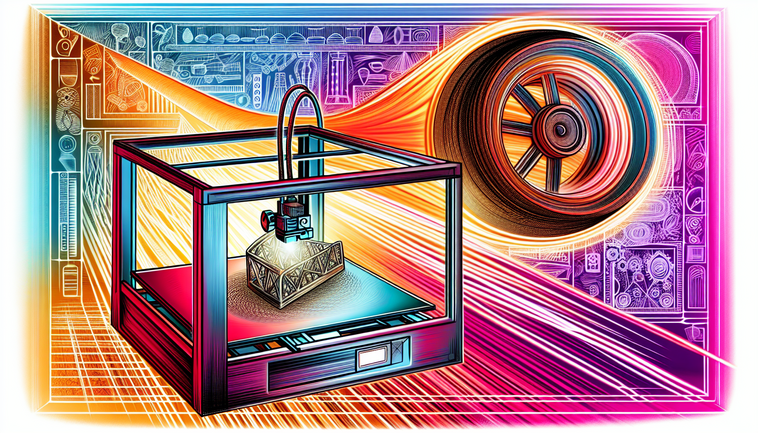
The primary method involves integrating a friction wheel into the printer’s filament drive system, which effectively aids in processing metal filament. The friction wheel design allows for the precise handling and feeding of metal wire through the printer’s nozzle, permitting accurate extrusion and deposition. Reports indicate that this method provides a stable way to manage metal wire’s inherent stiffness and brittleness, often hurdles in traditional metal 3D printing.
One of the most significant implications of this technique is the potential reduction in costs associated with metal 3D printing. Typically, acquiring a printer capable of handling metals is costly, often requiring a significant investment that is out of reach for hobbyists. However, retrofitting a widely popular Ender 3 with this new mechanism dramatically lowers the entry barrier, making metal printing far more accessible.
While this innovation is groundbreaking, it presents challenges that should not be overlooked. Ensuring uniform metal wire feed and adjusting printing speeds necessitate meticulous calibration. Improper adjustments can lead to print failures or even damage to the printer. Therefore, this method, although promising, may require users to possess a sound understanding of their 3D printer’s mechanics and be prepared for a trial-and-error learning curve.
Moreover, this advancement could spur further innovations in hybrid or multi-material printing technologies. By proving that a traditionally limited machine like the Ender 3 can be adapted for diverse materials, it’s plausible that future developments may yield multi-tool machines capable of producing complex assemblies without changing devices. Such progress could be particularly transformative for industries reliant on rapid prototyping and bespoke manufacturing.
In conclusion, the adaptation of an Ender 3 printer for metal printing using a friction wheel is a testimony to the power of creative problem-solving and engineering spirit. It challenges preconceived notions about the capabilities of consumer-grade 3D printers and encourages a culture of innovation. As more makers experiment with this method, the landscape of accessible metal printing will undoubtedly evolve, potentially altering how we approach manufacturing in both hobbyist and professional realms.